
REALNYX Research
A world under construction: where millions of new homes are being built — and where they are built for investors
Global development analysis 2026 | Outlook 2027–2030
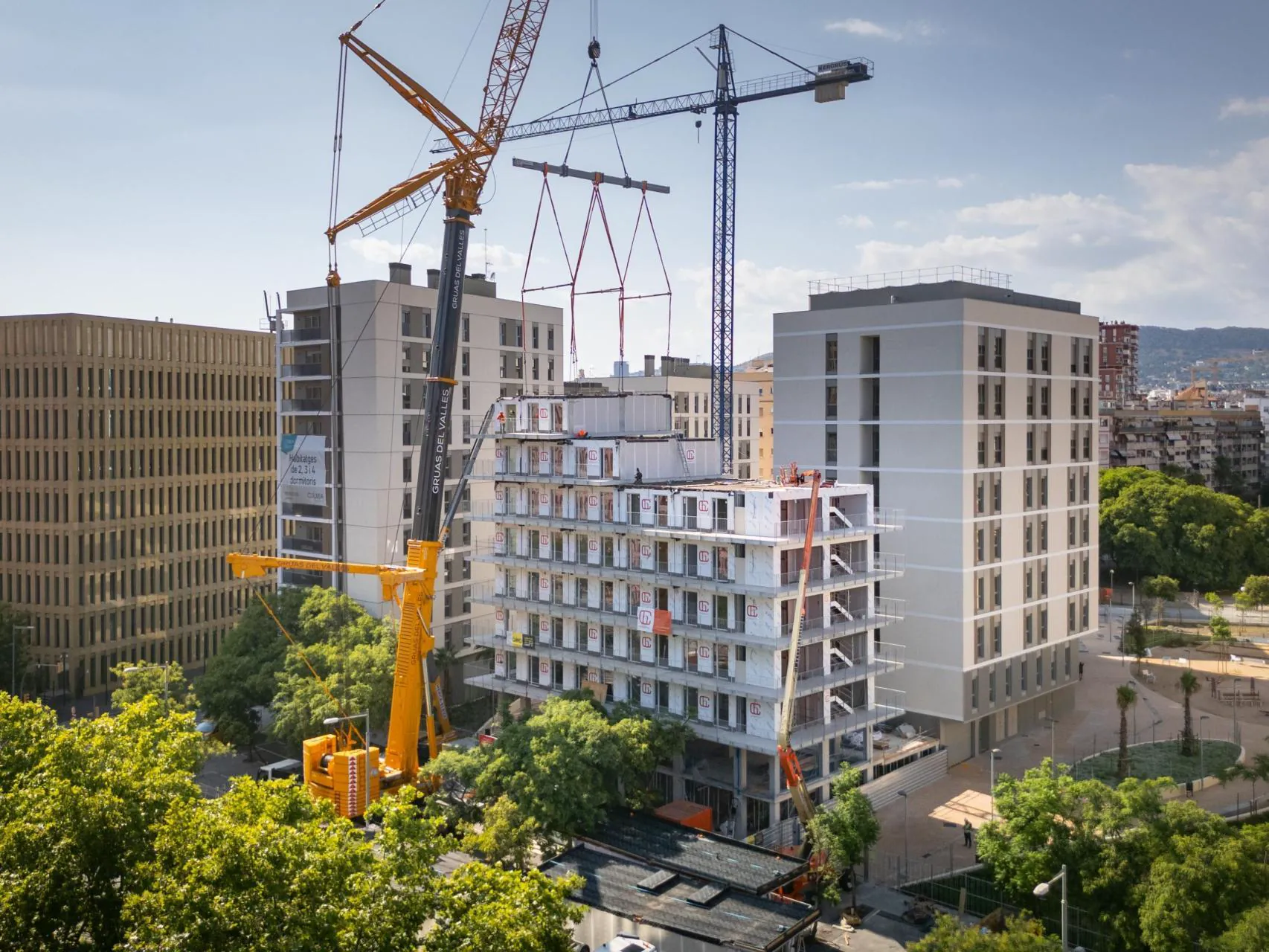
The world property market is entering a period in which location alone no longer decides. What also matters is whether a new property can be built, financed and brought to market at a price a buyer is willing to pay. While Asia and the Middle East are building whole urban districts, Europe is struggling with a shortage of affordable housing and the Mediterranean coasts are going through another wave of residential and holiday development. Where is the most being built today, what does a new apartment cost, and what happens to prices by the end of the decade?
Two worlds of new construction
At first sight the product is the same everywhere: a new flat, a house or a residential complex. Economically, however, today’s development is two clearly different markets.
The first answers a basic need for housing. Population growth, urbanisation, migration for work and smaller households create demand for millions of new homes. This segment dominates large parts of Asia, emerging metropolises and, ever more urgently, European cities.
The second world builds for mobile capital. Holiday apartments, second homes, serviced flats and gated residential resorts appear where international purchasing power meets an attractive climate, transport access and the expectation of long-term appreciation.
The difference between these two models will be one of the decisive factors in the world property market through 2030. Mass construction can ease a housing shortage. Luxury or holiday development can continue even in regions where local residents can no longer afford new homes.
1. Where in the world is the most being built?
The answer depends on whether one follows total construction floor area, completed dwellings, the value of investment or the pace of development.
China remains one of the world’s largest construction markets, but its former expansion is turning into consolidation. India, by contrast, is drawing on urbanisation and demographic growth. The United States has a large market in family houses and rental residences. The Gulf states are building new urban wholes, while European development is concentrating more and more on filling the housing gap in cities that already exist.
China: a building power in a slowdown
Consolidation
China deserves particular attention. After decades in which property became one of the main tools for accumulating private wealth, the market is meeting the consequences of developer debt, demographic change and excess supply in some locations.
- New construction floor area 2025
- 6.6 bn m²
- New construction floor area 2024
- 7.3 bn m²
Broader construction floor area cited by UNEP, not completed dwellings alone. Source: GlobalABC / UNEP.
India: urbanisation and a growing middle class
Expansion
Strong construction of new urban districts, housing complexes and transport infrastructure. Important centres include Bengaluru, Hyderabad, Pune and the Delhi area.
United States: a large residential market
Selective growth
Family houses, suburban communities and rental apartment projects. Construction follows the growth of job centres, but it is sensitive to mortgages, land and labour costs.
Saudi Arabia and the UAE: new urban wholes
Megaprojects
New residential districts, large mixed-use projects, infrastructure and tourist centres. A large volume of planned investment does not mean that every project will be finished on the original timetable.
Europe: construction returning after a slump
Gradual recovery
European development is concentrating more and more on filling the housing shortage in cities that already exist.
- Completed dwellings 2026
- 1.47 m
- Outlook 2028
- 1.66 m
EUROCONSTRUCT expects these figures in the countries it covers. Source: ifo Institute / EUROCONSTRUCT.
The Chinese example recalls a basic economic rule: growth in the number of new flats is not proof of a healthy property market. If construction runs ahead of real demand for a long time, even a spectacular development success can turn into a price correction.
2. What does a new apartment cost in 2026?
International comparison of new-builds is more complicated than developers’ advertising suggests. The price per square metre in Dubai, Madrid or Bangkok need not include the same items. Measurement of floor area, taxes, interior finish, fittings, the share of common parts and the legal form of ownership all differ.
The overview below therefore distinguishes published statistics from asking prices and does not pretend that these are perfectly comparable national averages.
| Market | Price per m² | Nature of the figure |
|---|---|---|
| Spain | €2,567 | Average new-builds, Tinsa, 2025 |
| Portugal | €2,402 | Median of new-builds sold, 12 months to Q1 2026 |
| Greece | €4,000 | Median asking prices of flats built since 2015 |
| Bosnia and Herzegovina, Sarajevo | €2,200 | New apartments, Q3 2026 |
| Austria, Vienna | €7,801 | Broader apartment market, Q3 2026 |
The figures come from different methods and geographic levels. This is not a single world ranking of new-build prices. Sources: Tinsa, INE Portugal, DataForGreece and Global Property Guide.
A large difference also exists inside each country. The Spanish national average cannot be treated as the representative price of a new sea-view apartment on the Costa Blanca or in Marbella.
In the same way the Portuguese national median covers quite different property from development offers in the most sought-after parts of Lisbon and the Algarve.
In some international catalogues aimed at foreign buyers, prices run several times higher than national statistics. That is not necessarily a contradiction. Those catalogues capture attractive locations and the more expensive end of the market.
Spain: new-builds are rising faster than ordinary housing
According to the Tinsa report Vivienda de obra nueva 2026, the average value of new-builds in Spain rose by 10.4% during 2025. New properties were on average 43% more expensive than older housing.
- Year-on-year rise in Spanish new-builds, 2025
- +10.4%
- Average new-build premium over older homes
- +43%
Tinsa, Vivienda de obra nueva 2026.
This creates a striking situation. A new-build is ever more costly for households, yet the developer does not have unlimited room to cut prices. Land, finance, design, building work and mandatory technical standards form a cost base that cannot simply be walked around.
3. Europe needs homes. Why are more of them not being built?
Europe’s problem is not only a shortage of land. Construction is held back by complex permitting, a shortage of skilled labour, high financing costs and the gap between the price at which a new flat can economically be built and the sum an average household can afford.
This is one of the largest paradoxes of current development: demand for housing can be huge without there being enough purchasing power for commercial construction.
A development project may therefore not be viable even in a city where people are desperately looking for a home.
A significant role will be played by rental residences owned by institutional investors, cooperative housing, publicly supported construction and standardised building methods.
European construction is recovering gradually on the EUROCONSTRUCT forecast. Germany remains an example of a market where a return to a higher volume of completions is expected only slowly.
The decisive question for the next decade will therefore not only be how many homes Europe needs. It will be the ability to turn that need into projects that can be financed.
4. The Mediterranean: a new generation of holiday development
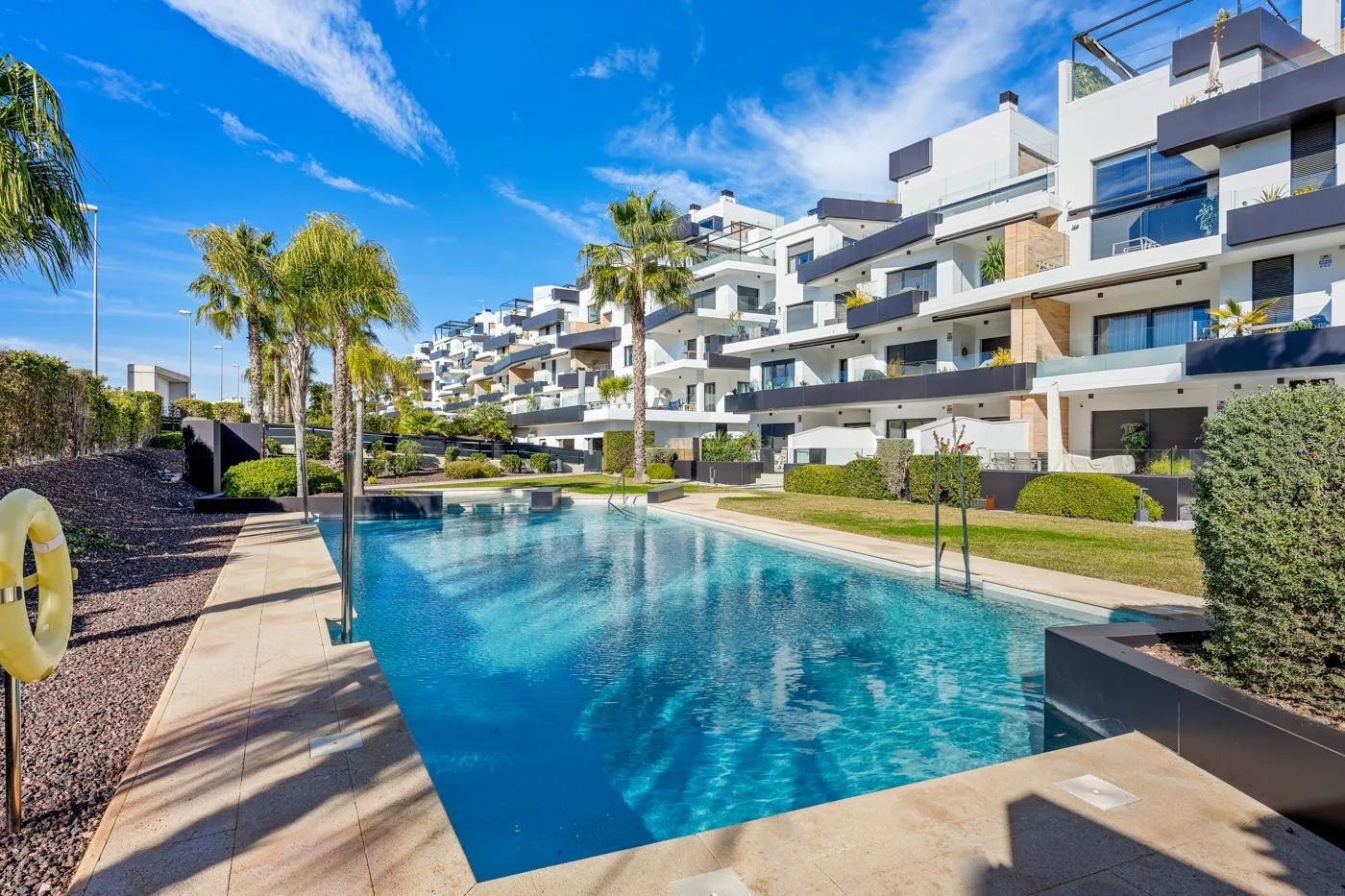
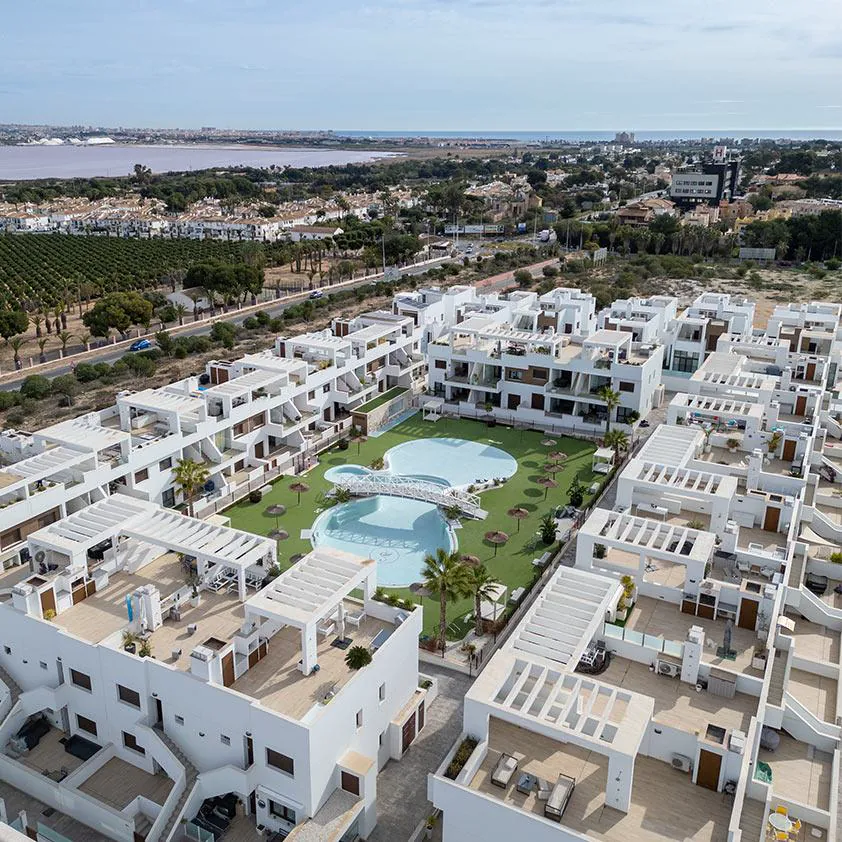
While large European cities are dealing mainly with permanent housing, the coastal regions of southern Europe are a different investment model. What decides here is not only the local population, but also foreign demand, air access, tourism and the ability to run the property over the long term.
Spain’s Costa Blanca and Costa del Sol, Portugal’s Algarve, the Greek islands, Cyprus and the Albanian coast are, however, at different stages of the development cycle.
Spain has an established market of foreign buyers, relatively mature infrastructure and a wide offer of residential projects. In some coastal locations, however, good building land is scarce and new-build prices already reflect strong international demand.
Portugal offers an attractive mix of a coastal way of life and international access. At the same time it faces sharp pressure on housing affordability, especially in the most sought-after areas.
Greece is seeing a revival of residential development after a long period of weak construction. According to the October analysis by DataForGreece, the number of private building permits rose by 10.4% in the twelve months to June 2026, yet remains far below the level before the financial crisis.
Albania is a less mature holiday market, where new opportunities can appear, but where the demands of checking title, infrastructure, permits and the real depth of demand are higher.
Cyprus joins international residential demand with a limited offer in some coastal areas. Prices and investment potential, however, differ sharply by city and by type of project.
Where can holiday development still grow?
For 2027–2030 three different opportunities can be identified.
The first are established markets, where new construction replaces an older housing stock and good plots are scarcer. Selected parts of the Spanish and Portuguese coasts belong here.
The second group are markets that are still building international infrastructure and a destination brand. The growth potential here can be higher — and so can the risk of mistiming the investment.
The third group are large integrated resorts, where the developer is not selling only an apartment but a whole setting: property management, services, sports infrastructure, restaurants and sometimes an operating yield model.
In these projects it is essential to distinguish the real value of the property from the marketing value of the promised services.
5. Dubai and the Gulf: when the developer builds a whole destination
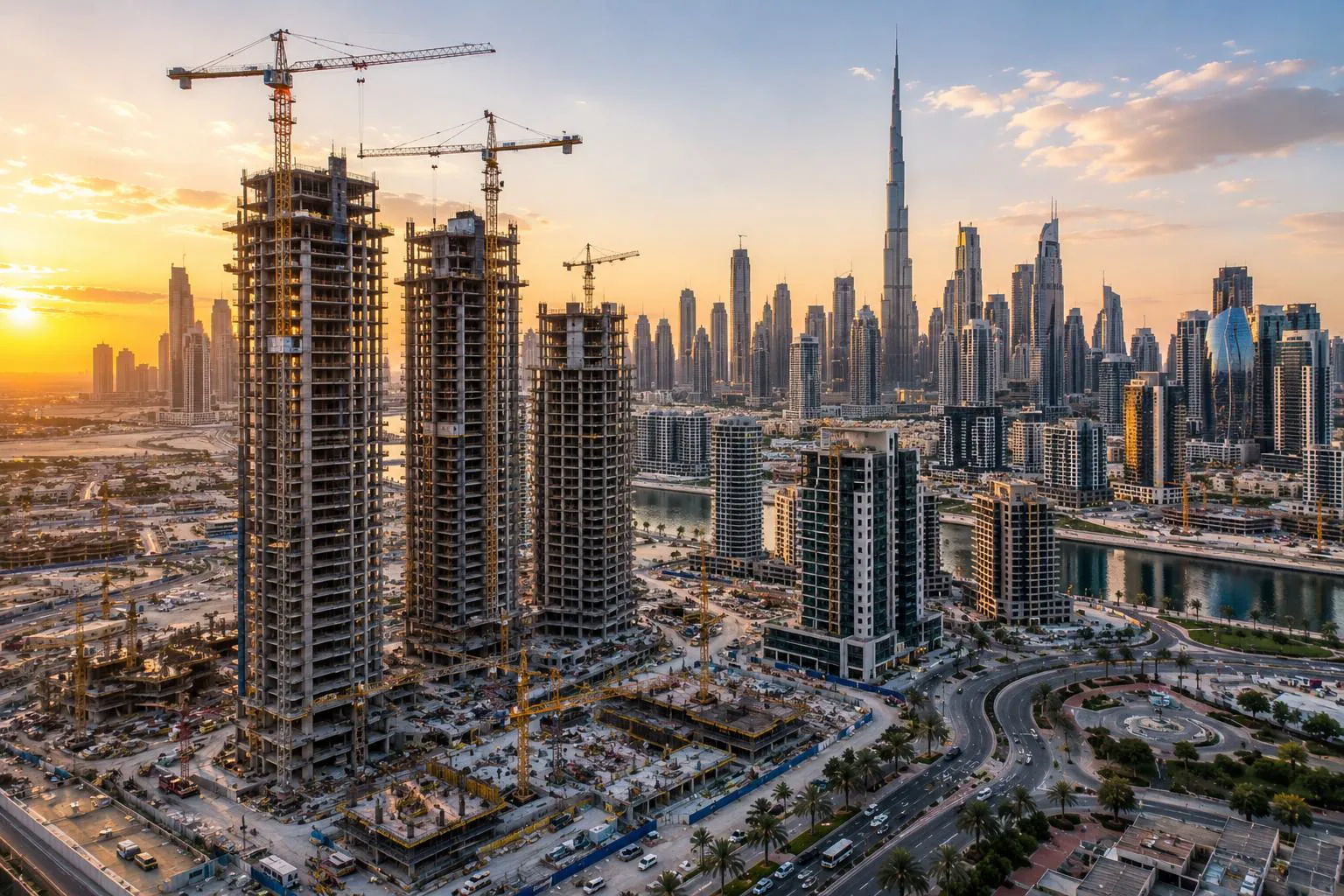
Dubai is one of the clearest examples of development based on international capital.
Its residential market does not depend only on domestic demand. It attracts foreign workers, entrepreneurs, investors and buyers of second homes. The offer includes ordinary flats, premium high-rise projects, villas and branded residences.
A substantial part of the market is the sale of property under construction, known as off-plan. The buyer finances part of the price in stages and the developer can use pre-sales as part of project finance.
This model, however, transfers to the buyer the risks of completion date, quality of delivery and the future market price.
Saudi Arabia goes further in some projects. Development there is part of a wider economic transformation that includes tourism, infrastructure, industry and the creation of new urban centres.
The scale of investment plans is extraordinary. At the same time a large number of announced projects may later put pressure on prices if supply grows faster than the number of real users.
That is why one cannot automatically assume that the fastest-growing development market will also be the most profitable market for the end buyer.
6. Materials, wages and inflation: why cheap construction is not coming back
One of the most important findings of 2026 is that the calming of inflation does not mean a return of construction costs to their old level.
According to Eurostat, the price of construction work on new residential buildings in the European Union rose by 48.2% between 2015 and 2025.
- Rise in EU construction prices, 2015–2025
- +48.2%
Eurostat, construction-cost index for new residential buildings. The figures show cost dynamics, not the rise in sale prices of flats. Among the fastest increases in this period were Bulgaria, Hungary, Romania and Czechia.
For developers this is a fundamental change in the economics of projects.
The price of concrete, steel, insulation or technology can fall in particular periods, but the overall building budget is also shaped by wages, the availability of subcontractors, energy standards and financing costs.
JLL’s global report of October 2026 expects construction costs in 2027 to rise worldwide by about 3.1–4.2%, after an expected rise of 3.5–4.7% in 2026.
JLL also notes that annual construction-cost growth of around 3–6% is becoming the new planning standard, whereas before 2020 it was more common to count on 2–3%.
What will raise the cost of building the most?
- Labour. A shortage of skilled building trades raises wage costs and lengthens timetables.
- Energy and technical requirements. Better insulation, more efficient cooling, renewables and modern technology raise the initial investment, but can lower running costs.
- The cost of finance. Higher interest rates make it more expensive to hold land and to finance unfinished projects.
- Land and permitting. In attractive locations the price of land and the time needed for a permit can matter more than the building materials themselves.
- Geopolitical risk. Transport, energy, trade limits and breaks in supply chains can repeatedly produce price swings.
What will decide is not only the construction price per square metre. Ever more important will be the total time from the purchase of land to the handover of the finished flat.
7. What does it really cost to build a new flat?
On JLL’s global index, average direct construction costs for high-rise residential buildings run at about 2,280–3,710 US dollars per square metre, depending on the market and the technical standard.
That is not the sale price of the flat.
To the direct construction cost the developer must add land, design documents, permits, infrastructure, finance, selling costs, taxes and a reasonable business margin.
| Item | Amount |
|---|---|
| Land and infrastructure | €4.0 m |
| Building work | €18.0 m |
| Design, permits and technical services | €1.5 m |
| Finance, sales and reserve | €3.5 m |
| Total cost | €27.0 m |
- Cost per saleable m²
- €3,000
- Price for a 20% margin on sales
- €3,750/m²
A hypothetical project of 100 apartments with 9,000 m² of saleable area. The sums are not a market average for any particular country. For the stated margin the project would need sales of €33.75 m before any taxes on sale. A margin is not the same as the return on equity.
This simple model explains why two similar apartments in the same area can have sharply different prices. One developer bought the land ten years ago; the other is buying it today. One finances the project mainly with equity; the other with a bank loan.
And these differences will, in the years ahead, decide which developers can still offer competitive prices.
8. Will new-build prices keep rising?
The idea that the prices of new homes must automatically rise with construction costs is misleading.
A developer may have higher costs, but if buyers refuse the asking price the project will not sell. The result can be a lower margin, a delay, smaller flats or a halt to the project.
Data from the Bank for International Settlements show that in the first quarter of 2026 global residential property prices, after inflation, fell by 1.2% year on year. Differences between countries were large: while prices rose sharply in Portugal and Spain, China recorded a fall.
This confirms that there is no single world property cycle.
Three possible scenarios to 2030
The REALNYX editorial model starts from a new apartment priced at €300,000 in 2026. The base scenario assumes a modest nominal rise of three percent a year — by 2030 such a property would cost €337,653.
A growth scenario would need demand to stay stronger than supply in locations with limited construction. A correction scenario assumes that higher developer costs will not pass into the sale price if buyers stop accepting the asking sum.
| Scenario | Assumption | Illustration |
|---|---|---|
| Base | +3% a year nominally | €300,000 → €337,653 |
| Growth | Demand stronger than supply | Faster nominal rise in constrained locations |
| Correction | Buyers refuse the price | Lower margin, delay or a halted project |
A REALNYX editorial scenario. This is not a statistical forecast. The model uses a nominal price, without tax, transaction costs or rental yield. The scenarios illustrate price sensitivity; they do not predict a particular location.
Over the long term, good new-builds in locations with a limited offer are more likely to hold value than projects in areas of rapidly growing construction and uncertain demand.
Even an attractive coastal location is not a guarantee of growth. What will decide is real occupancy, access to services, the quality of infrastructure, running costs and the ability to sell the property later.
9. How will development itself change?
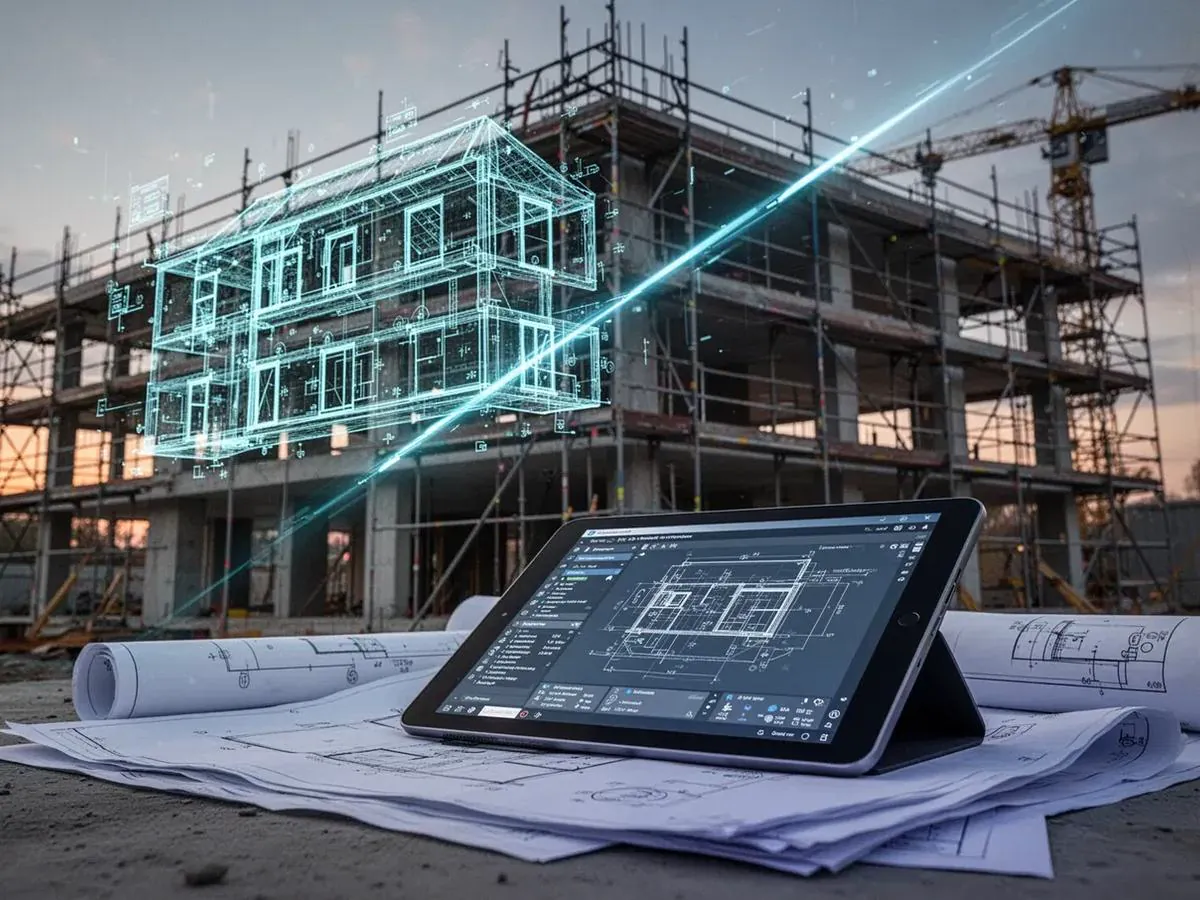
2030 need not bring only more expensive flats. It can also bring another way of designing, financing and building them.
Prefabrication and modular technology can shorten some stages of delivery and reduce dependence on work on the site itself. Their economic advantage will, however, depend on the standardisation of projects, transport and a sufficient volume of production.
The digitisation of design will allow more accurate budgets, coordination of the technical trades and better control of timetables. Artificial intelligence can help with layouts, energy performance and construction planning. It will not remove the cost of land or of physical delivery.
The product itself will also change. For holiday apartments, energy efficiency, good cooling, acoustics, the management of common parts and services that allow the property to be used without the owner being there every day will grow in importance.
The future buyer will therefore not judge only the number of bedrooms and the distance from the sea. Ever more important will be the total cost of ownership over ten or twenty years.
10. The largest investment opportunity may not be where the most cranes stand
For an investor it is essential to separate development activity from investment appeal.
A high number of new projects can signal developers’ confidence in future demand. It can also mean that too many similar apartments are arriving on the market at once.
Conversely, a region with limited construction can offer interesting potential if it has a stable economy, a growing population and an insufficient offer of good housing.
When a new project is judged, it is therefore not enough to compare the price per square metre with the competing offer. It is more important to answer a few questions. How many other flats are being built nearby? Who will actually use them? What is the purchasing power of that group? What will it cost to run the property, and what alternative offer exists on the secondary market?
For holiday projects one more variable is decisive: the regulation of short-term lets. A yield based on tourist use cannot be treated as certain if it has not been checked in law and in economics.
The REALNYX outlook: 2027–2030
World new construction will probably continue in two different directions.
In emerging metropolises the main task will be to create enough working homes for a growing urban population. In advanced economies development will have to deal with housing affordability, an ageing housing stock and rising quality requirements.
Holiday markets will keep competing for international capital. Not all will succeed in the same way. Some destinations will gain from transport links, infrastructure and a stable legal setting. Others may hit excess construction, environmental limits or weak demand outside the main tourist season.
The path of construction costs suggests that a return to cheap building before 2020 is not a realistic base case. That, however, does not by itself guarantee rising sale prices.
The most important difference of the next decade will not be where the most new flats are built, but where new construction matches real, lasting demand.
For the buyer this means one thing: in 2026 it is no longer enough to buy a new-build because it is new. One has to understand the economics of the project, the future of the location and the value the property will still have when another development rises next door.
Sources and method | REALNYX Research
The analysis is based on data available on 5 November 2026. Main sources: Eurostat — residential construction prices; JLL — Global Construction Costs Index 2026; BIS — global housing prices; Tinsa — new-builds in Spain; ifo / EUROCONSTRUCT — European construction; and the UNEP Global Status Report for Buildings and Construction 2025–2026.
Price comparisons use different statistical definitions and are not a direct valuation of particular projects. The 2027–2030 outlooks are analytical scenarios, not guaranteed investment results.
The most important difference of the next decade will not be where the most new flats are built, but where new construction matches real, lasting demand.